UI/UX
AI
Wireframing
Branding
Role
SR. UX Designer
Company
Freelance project
Team
Dev, Marketing
Platform
iOS, Android
Year
2025
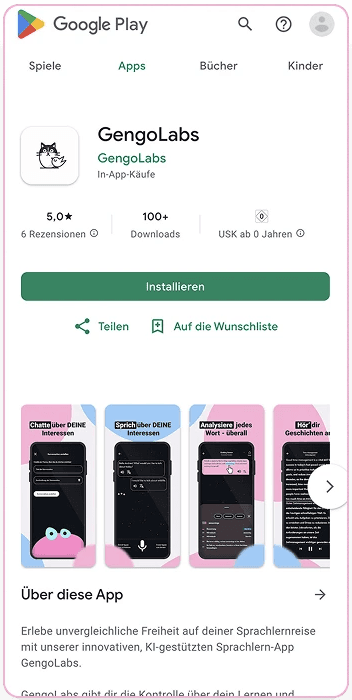
As a UX designer on Gengo, my focus was on creating a personalized, engaging, and user-centered language learning experience.
What Que Cosa was 何だって?
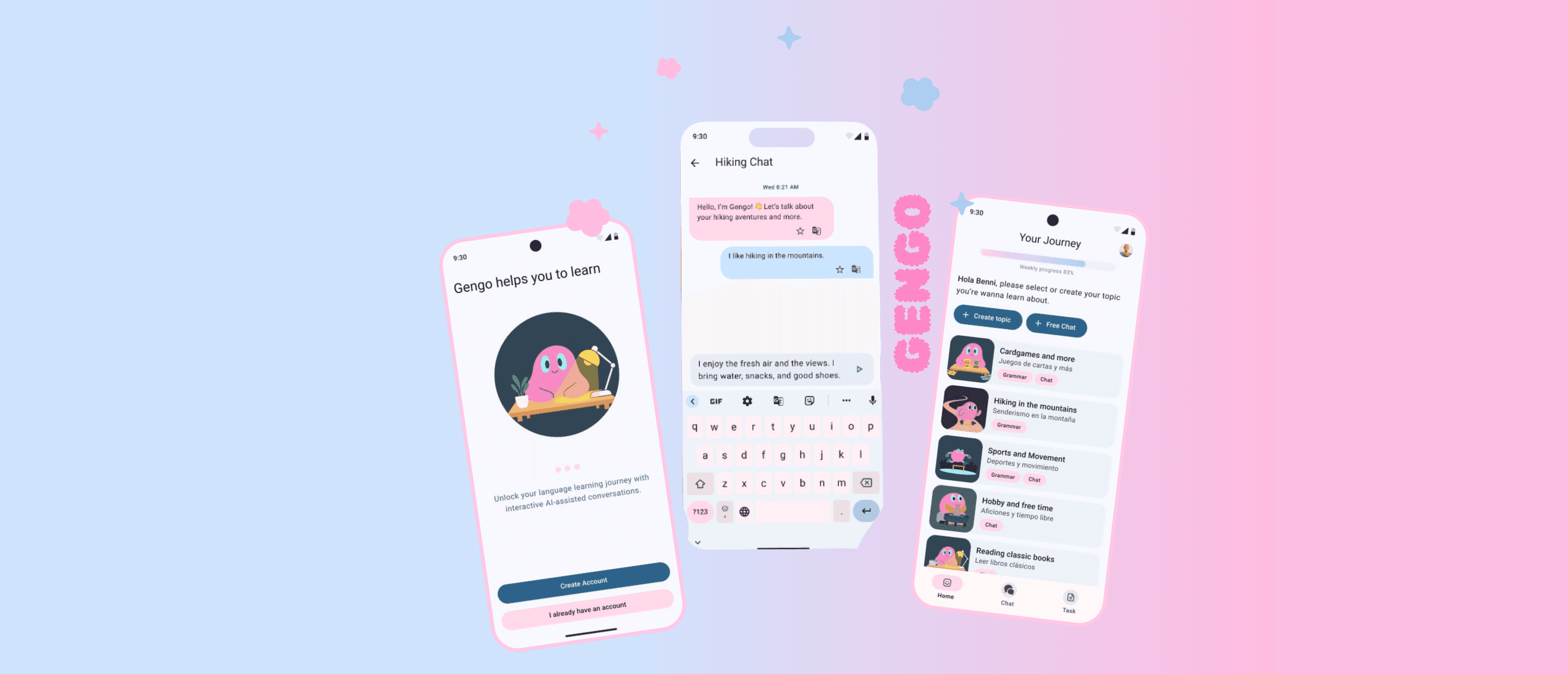
Gengo is an experimental, AI-powered language learning app developed as a freelance experimental project in collaboration with developer Benjamin Kunz, who brought the initial idea. We are both passionate language learners.
Issues
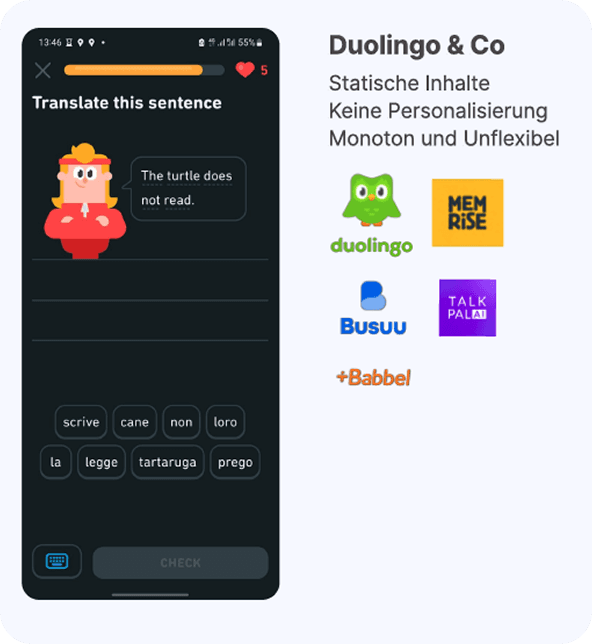
Many language apps static, one-size-fits-all content
Low learning curve
Often prefabricated learning topics
Goal
" transform="translate(5.769 2.044)" width="4.80488020049448px"/><path d="M 5.628 0.023 C 6.138 -0.092 6.643 0.238 6.755 0.759 C 6.868 1.28 6.544 1.796 6.034 1.911 C 6.034 1.911 6.033 1.911 6.032 1.911 C 6.031 1.912 6.028 1.912 6.025 1.913 C 6.018 1.914 6.008 1.917 5.995 1.92 C 5.97 1.926 5.932 1.934 5.885 1.944 C 5.791 1.966 5.659 1.996 5.507 2.031 C 5.204 2.101 4.828 2.189 4.526 2.262 C 4.071 2.374 3.359 2.726 2.794 3.184 C 2.497 3.425 2.295 3.848 2.039 4.523 C 1.905 4.876 1.868 5.444 1.907 6.119 C 1.945 6.782 2.04 7.355 2.089 7.786 C 2.152 8.335 2.377 8.838 2.684 9.734 C 2.911 10.399 3.204 10.804 3.572 11.07 C 4.047 11.412 4.602 11.618 5.288 11.907 C 5.506 11.998 5.845 12.06 6.287 12.066 C 6.717 12.073 7.186 12.026 7.623 11.946 C 7.889 11.897 8.102 11.777 8.337 11.584 C 8.461 11.482 8.58 11.37 8.724 11.234 C 8.86 11.106 9.025 10.949 9.203 10.806 C 9.677 10.427 10.023 9.95 10.508 8.873 C 10.919 7.961 11.031 7.314 11.084 5.8 C 11.1 5.329 11.124 4.838 11.096 4.365 C 11.067 3.874 10.987 3.549 10.886 3.373 C 10.622 2.913 10.773 2.32 11.223 2.05 C 11.674 1.78 12.254 1.935 12.518 2.395 C 12.851 2.976 12.95 3.677 12.984 4.248 C 13.019 4.836 12.989 5.442 12.974 5.869 C 12.917 7.501 12.787 8.438 12.227 9.681 C 11.686 10.882 11.184 11.677 10.37 12.328 C 10.264 12.413 10.155 12.515 10.01 12.652 C 9.874 12.78 9.706 12.94 9.521 13.092 C 9.136 13.408 8.635 13.725 7.954 13.849 C 7.423 13.946 6.833 14.007 6.261 13.999 C 5.701 13.991 5.094 13.916 4.567 13.695 C 3.997 13.455 3.177 13.151 2.482 12.65 C 1.71 12.093 1.218 11.309 0.898 10.374 C 0.664 9.689 0.305 8.841 0.21 8.01 C 0.174 7.697 0.061 6.967 0.018 6.233 C -0.024 5.511 -0.015 4.588 0.275 3.824 C 0.508 3.21 0.861 2.284 1.618 1.67 C 2.359 1.068 3.317 0.57 4.086 0.382 C 4.4 0.305 4.787 0.215 5.092 0.145 C 5.245 0.109 5.38 0.079 5.475 0.058 C 5.523 0.047 5.561 0.038 5.588 0.032 C 5.601 0.029 5.611 0.026 5.618 0.025 C 5.621 0.024 5.624 0.024 5.625 0.024 C 5.626 0.023 5.627 0.023 5.627 0.023 Z" fill="rgb(0, 102, 71)" height="14.000000000000004px" id="NaACzaWyi" transform="translate(1.236 2.044)" width="12.999999990113576px"/></svg>)
Dynamic chats and tasks for better motivation
Focus on personalization with AI-powered chats
Adapt learning process to user needs
My Role in This Conversation
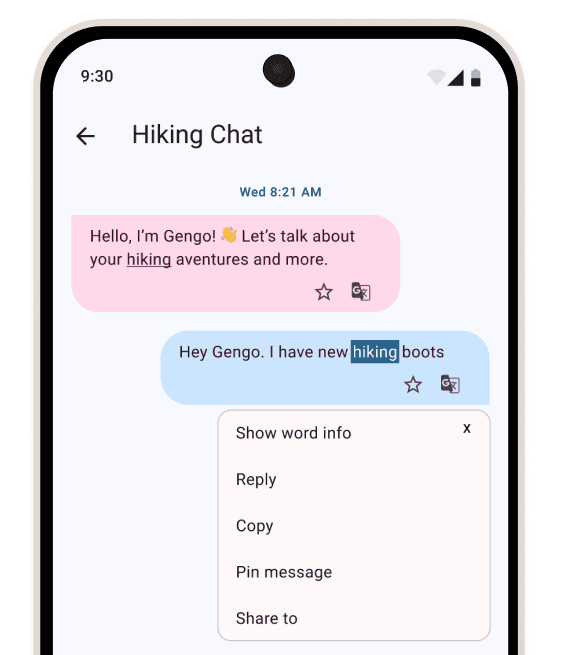
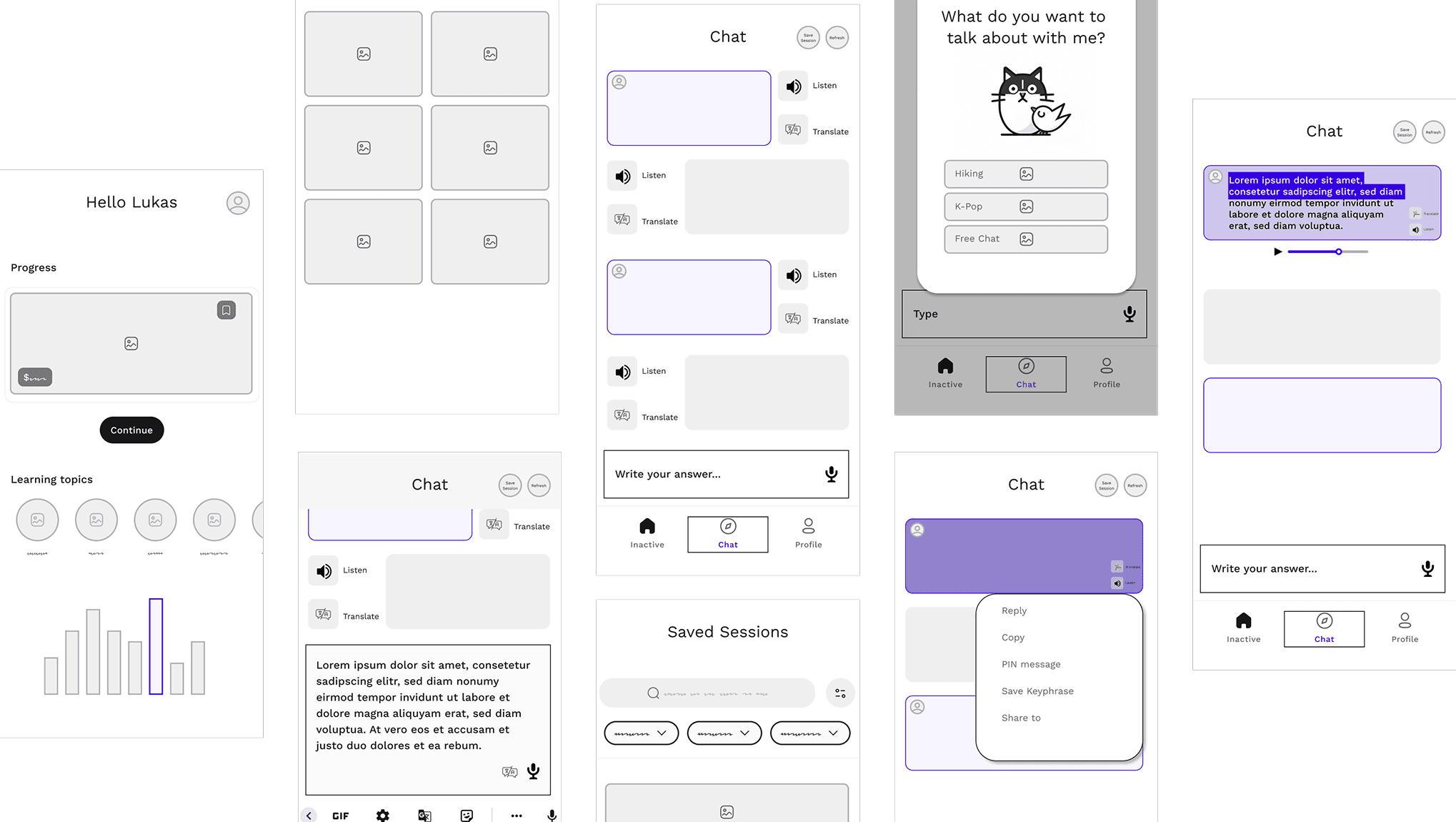
I was responsible for UX and UI design, including wireframes, branding, color system, and high-fidelity MVP mockups. The design focuses on clarity, friendliness, and personalization, aiming to move beyond static lessons toward dynamic, user-centered language practice.
Wireframing
Visual identity
High Fidelity MVP
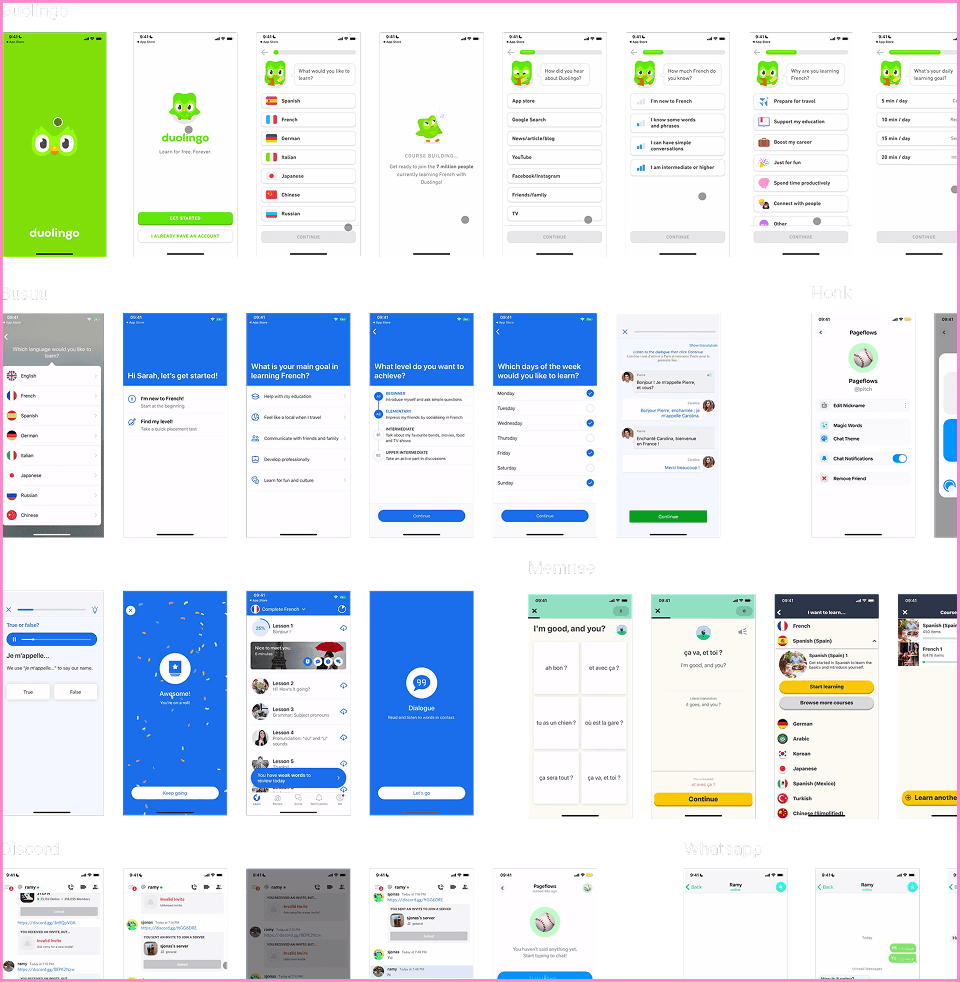
Competitor analysis & moodboard
Wireframes
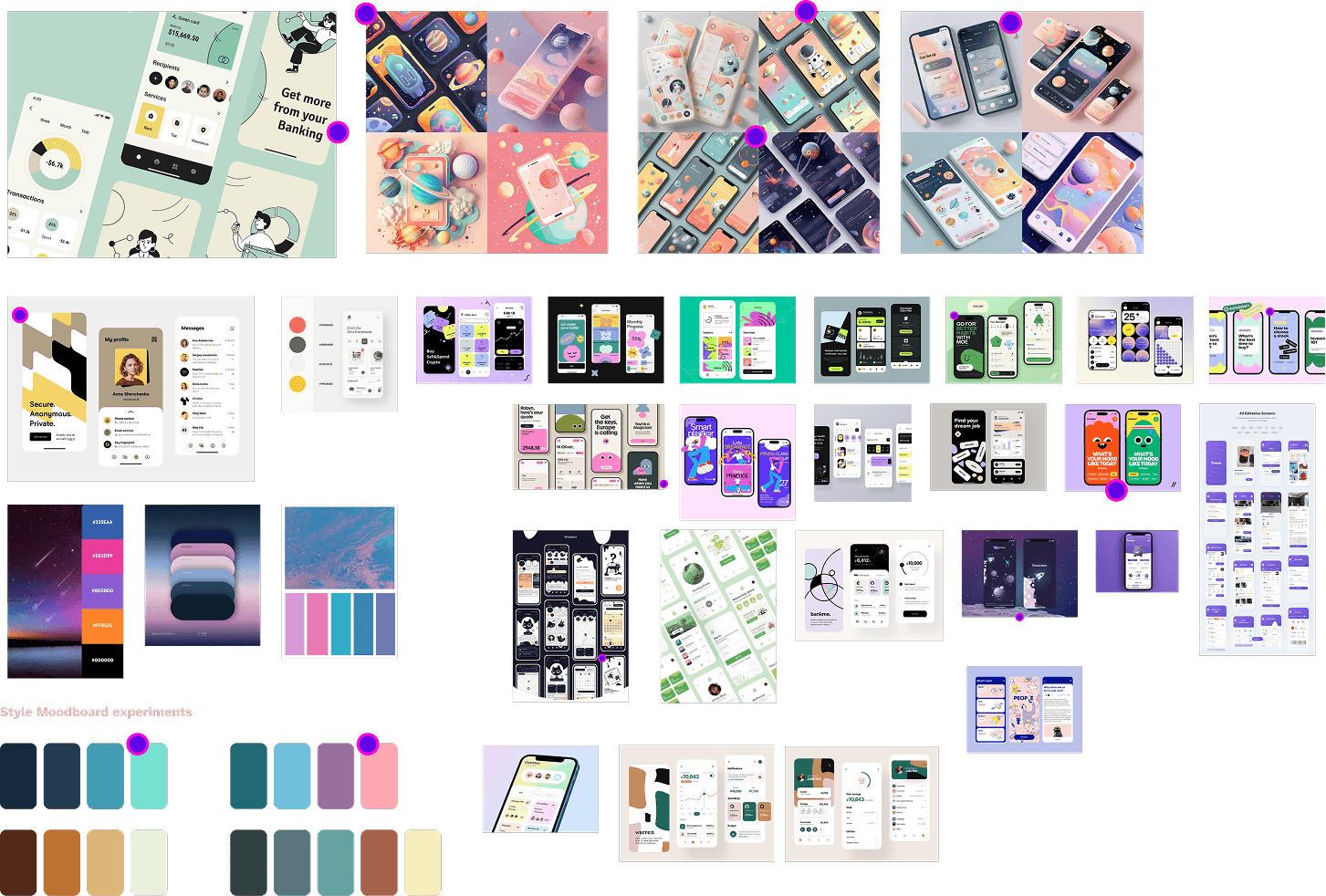
Visual identity
Bright colors and a playful mascot accompany the user as they learn.
The word “Gengo” means “language” or “speech” in Japanese.
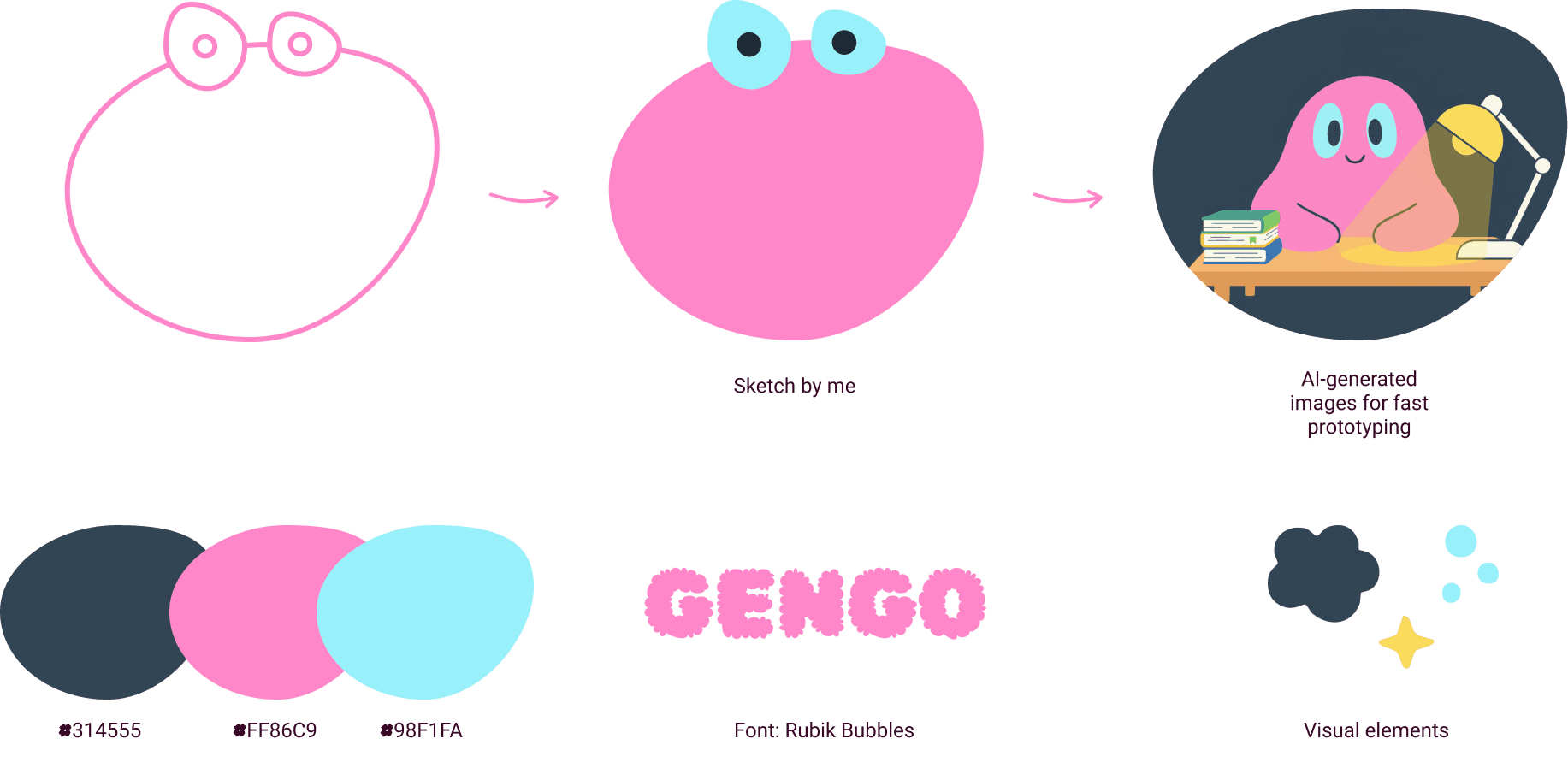
I’m a passionate language learner and this project taught me that good UX in AI products isn’t about endless possibilities, but about creating clarity, trust, and motivation over time.
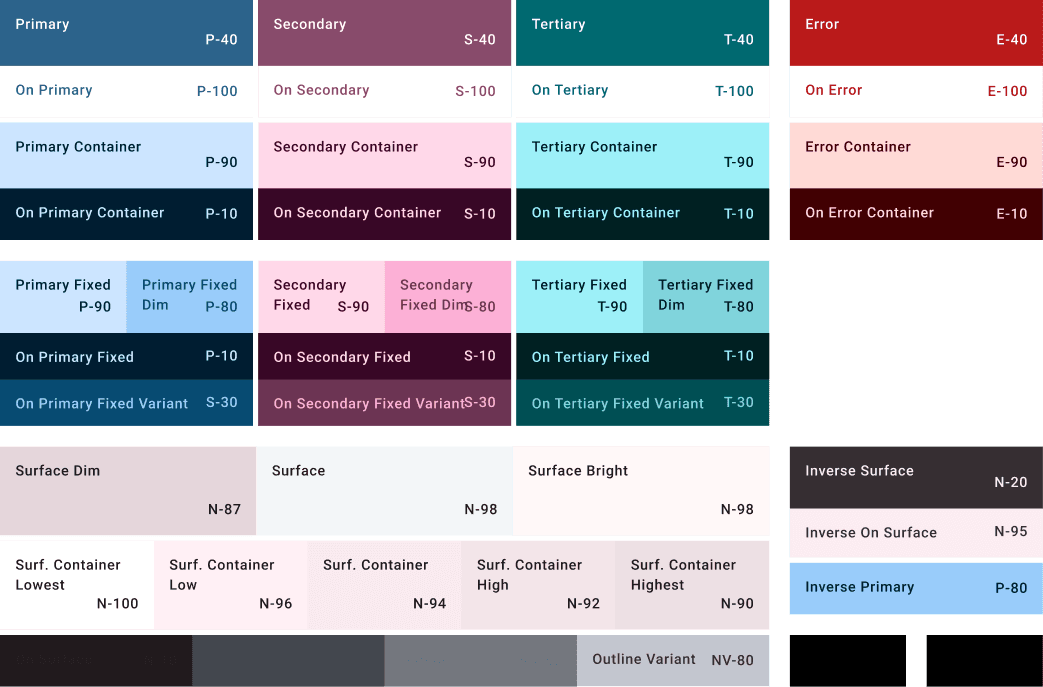
Color Scheme and library
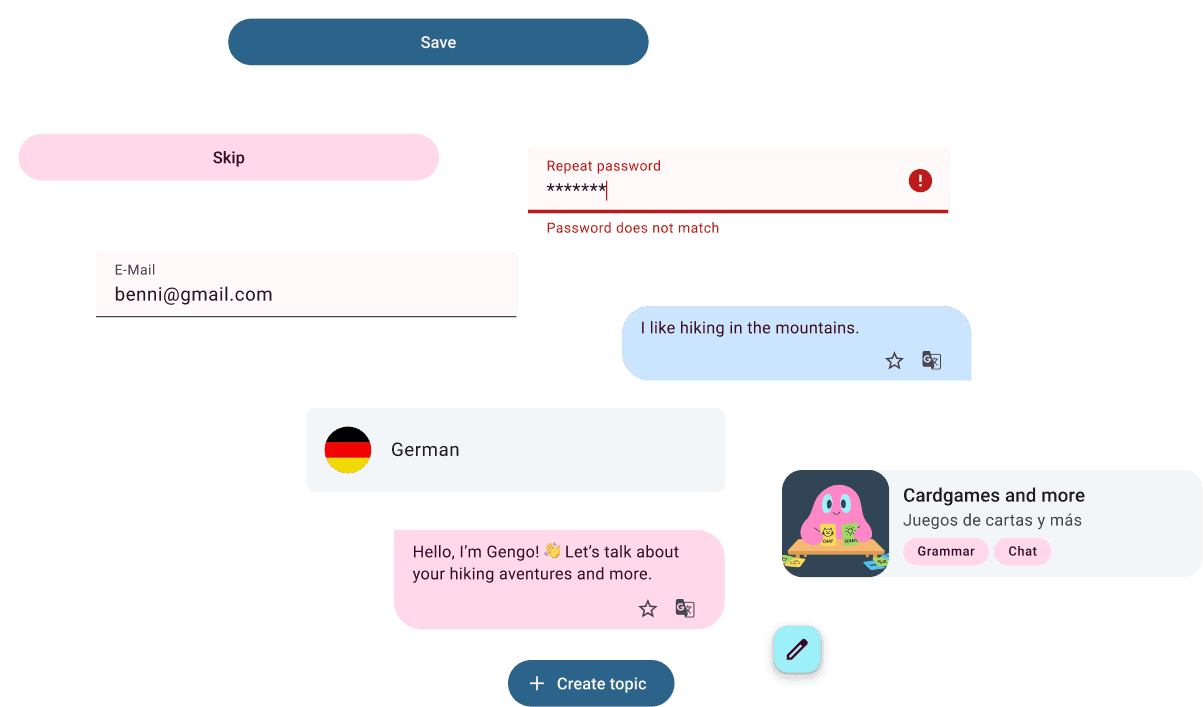
Material 3 Builder was used to define colours , text styles and components.
Here are the definitions for the light mode.
Gengo MVP Flow

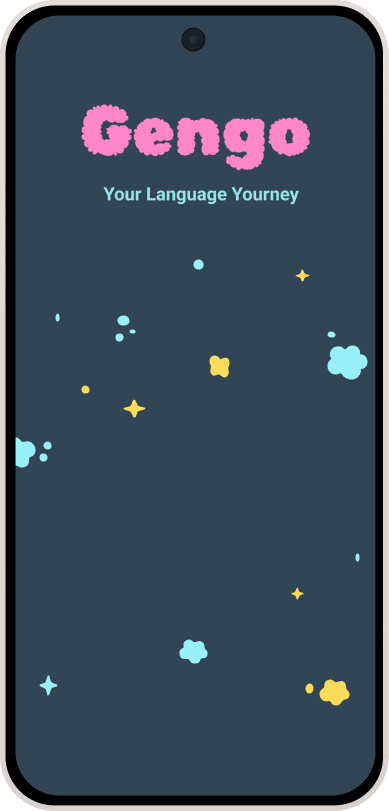
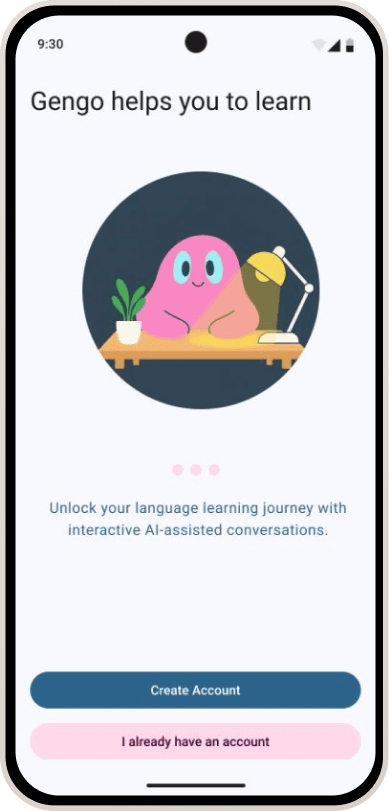
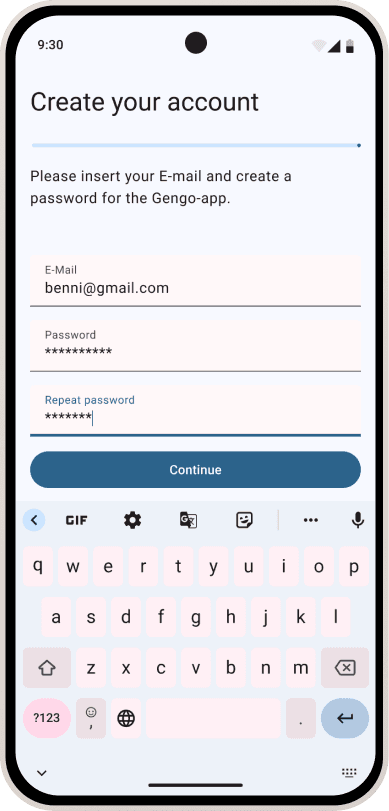
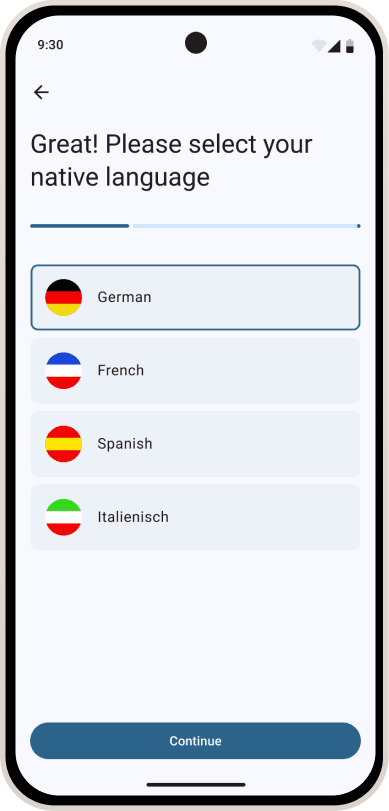
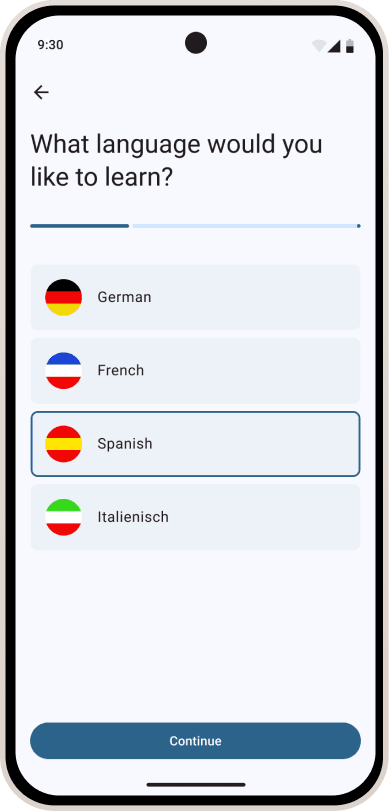
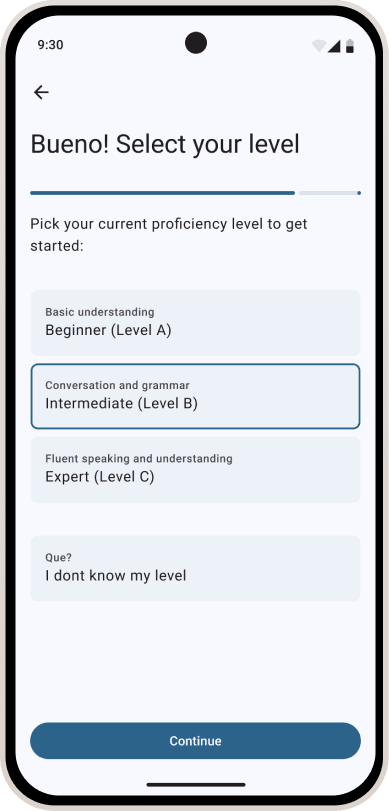
Language level are saved in the backend according to learning standards
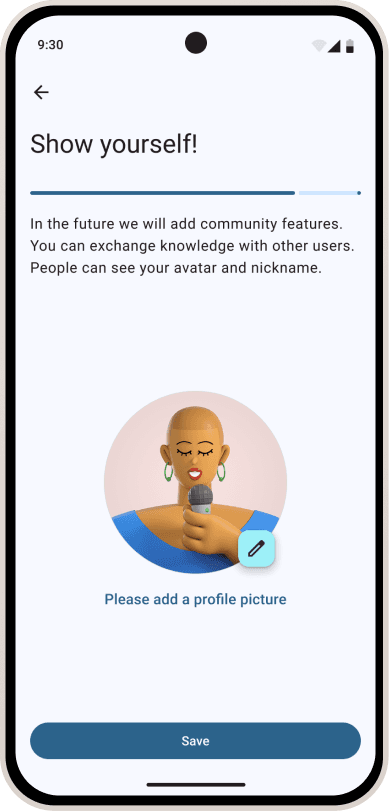
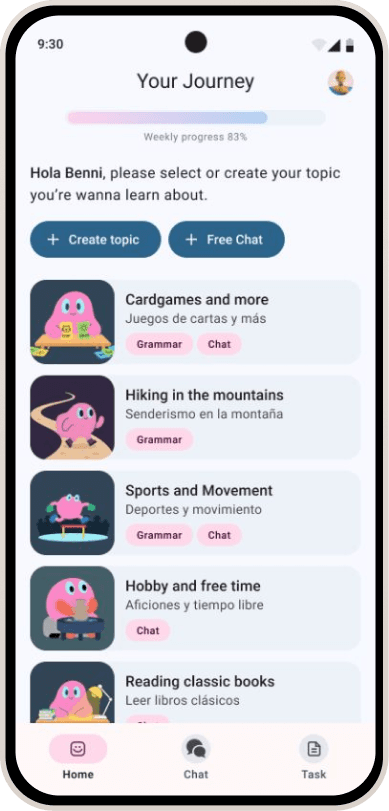
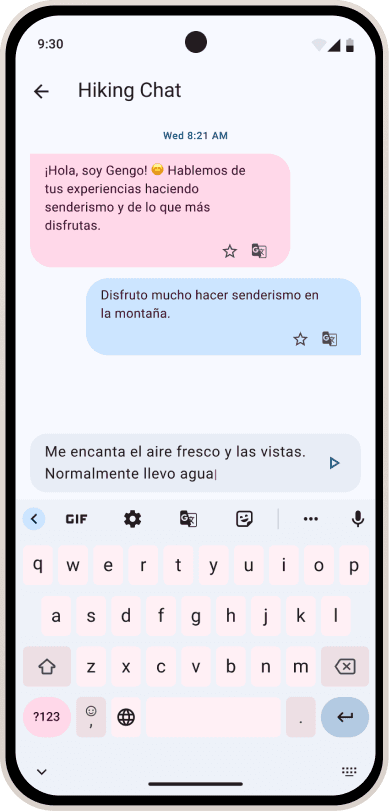
Free chat or saved topic
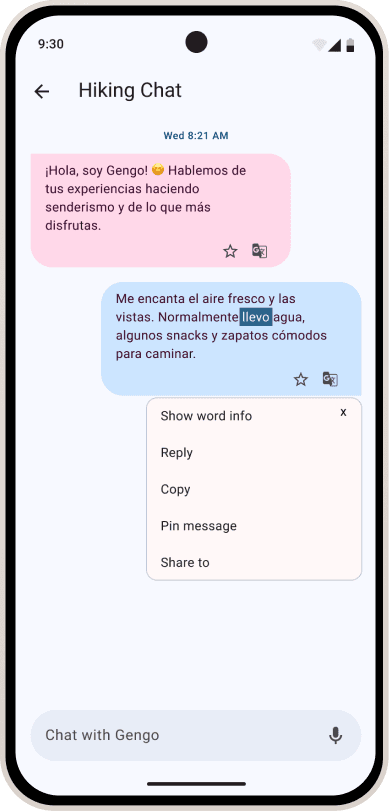
Tap options
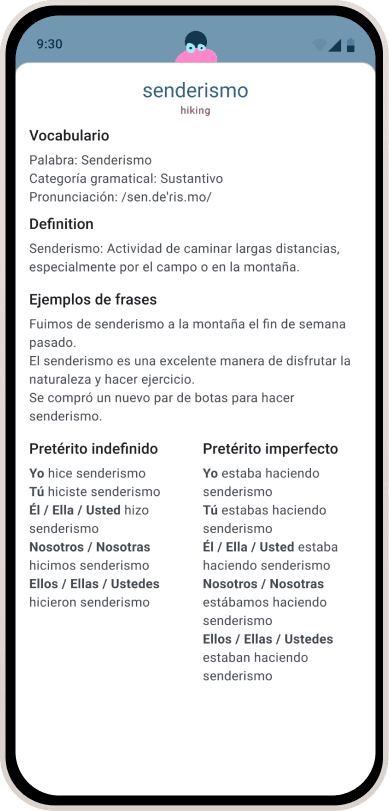
Get word details, grammar
and tenses
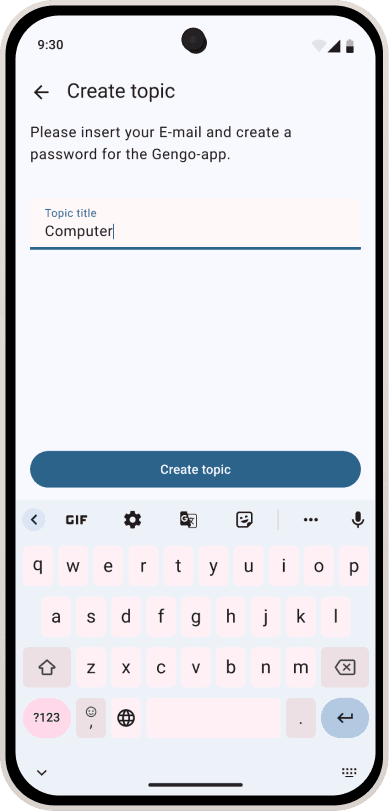
Create and save topic
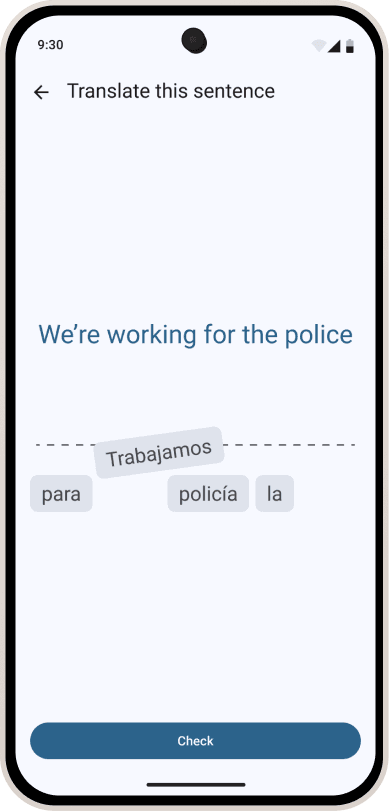
Playful learning task
AI Acceleration in the process
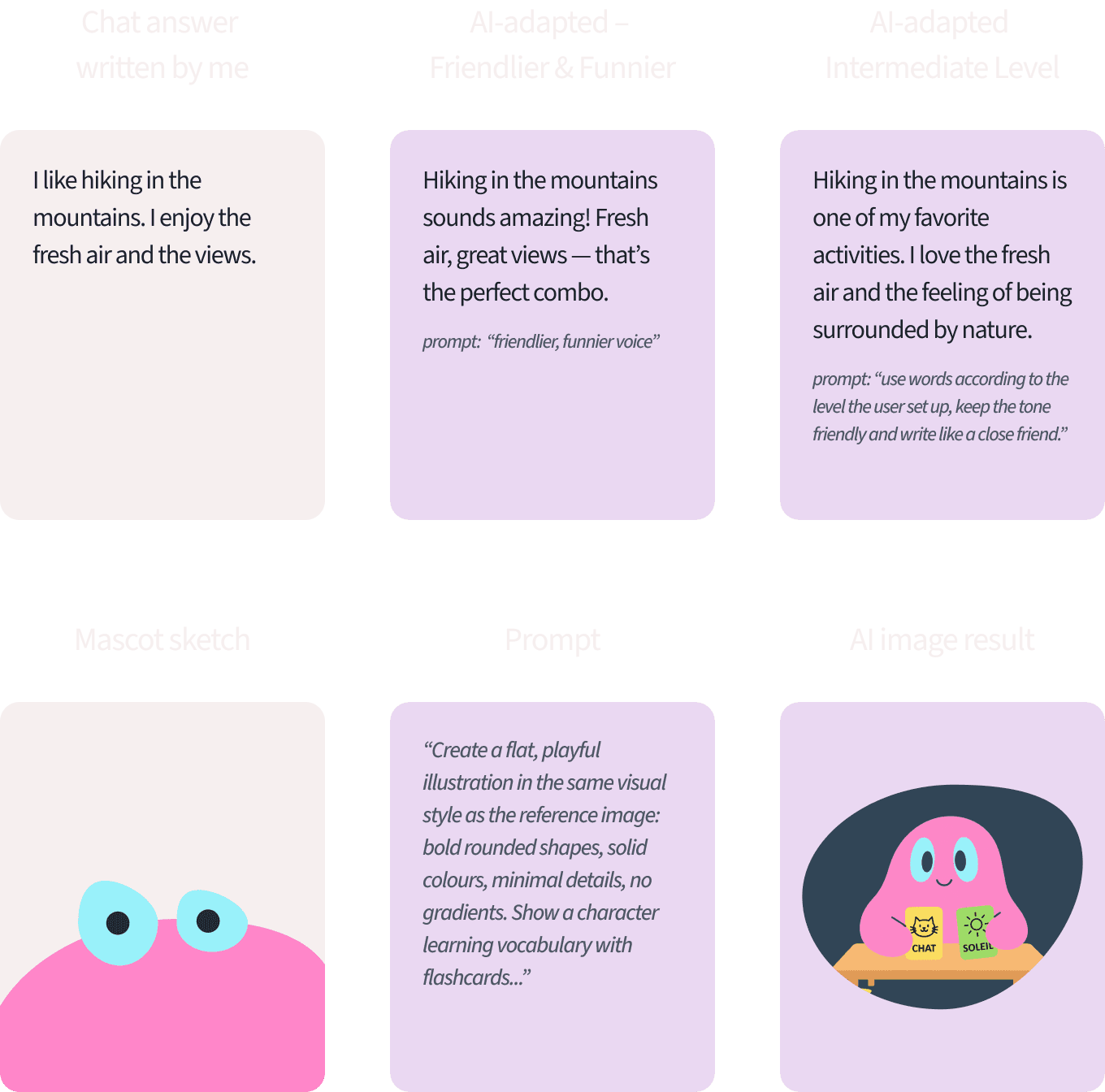
AI was used early on to explore the tone of voice of the chat. In the mid-stage I moved from hand-drawn sketches to AI-generated illustrations using Adobe Firefly, enabling fast visual iteration and a consistent illustration style for the MVP.
WHAT’S IN THE BACK?
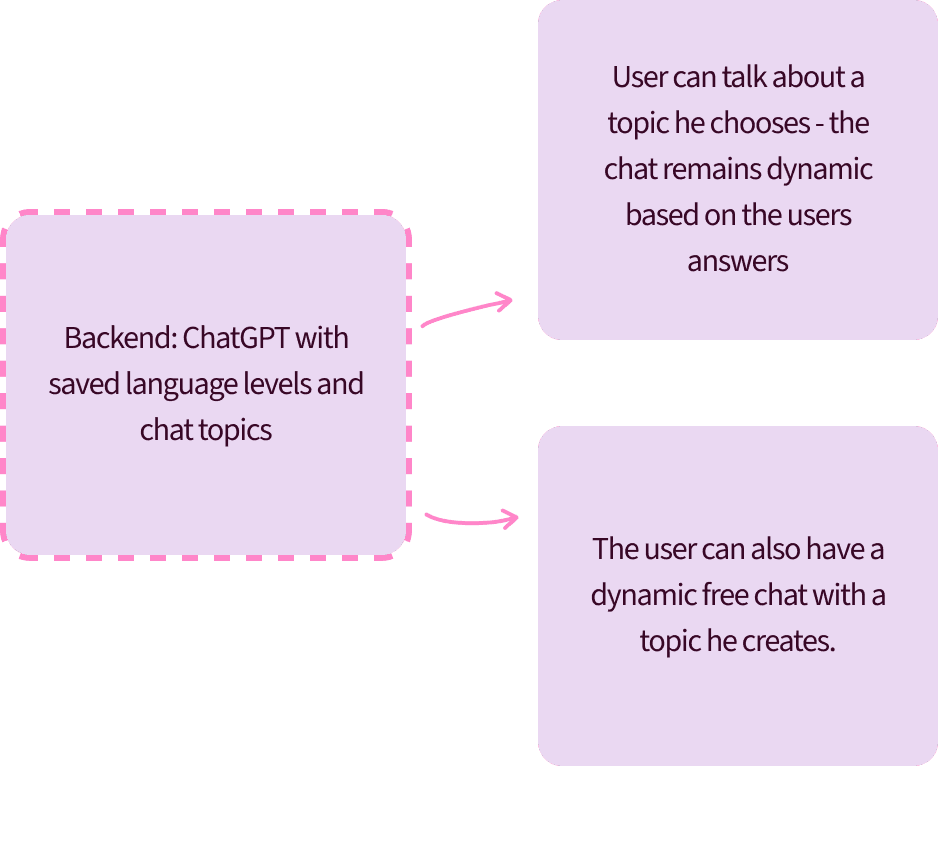
The dynamic chat uses ChatGPT to enable open, adaptive language practice. Conversations adjust to the user’s level, goals, and topics, offering a more flexible and realistic alternative to scripted lessons. Users can practice real-life scenarios with the help of AI, ask follow-up questions, or shift topics freely, without being restricted to fixed lesson structures.
Thoughts (and prayers)
This project showed me that products like this require significantly more time for exploration, testing, and iteration than initially expected. I would further explore onboarding, feedback mechanisms in chats, and long-term motivation patterns. In parallel, I am currently exploring Figma Make to prototype AI-driven interactions more efficiently.
COLLABORATION WITH A DEVELOPER EARLY ON
Working closely with a developer from the start helped align design ambition with technical reality. Next time I would use AI even sooner in the exploration phase.
AI AS A TOOL
I deepened knowledge about intentional AI as a design accelerator. It helped me explore language tones and enabling fast visual iteration and a consistent illustration style for the MVP.
DESIGNING FOR WHAT MATTERS FIRST
We focused on the core learning loop before adding secondary features. All-tough it was difficult to find the right balance between a visual identity and the UI. In a ideal world, there would be two separate designers for each task or more time.
DEVELOPMENT-FIRST EXPLORATION
Instead of starting with a full product build, the developer created a test app to explore core functionality early. We tested and iterated together, which influenced later design decisions.
TIME MANAGEMENT
Because this was an unpaid freelance side project, aligning schedules was challenging at times. Despite this, the MVP design was completed and handed off.
AI AS A TOOL
I deepened knowledge about intentional AI as a design accelerator. It helped me explore language tones and enabling fast visual iteration and a consistent illustration style for the MVP.
DESIGN VS. SHIPPED PRODUCT
After the release, the project was paused because of time constraints, highlighting the importance of scope and long-term capacity in side projects.
DEVELOPMENT-FIRST EXPLORATION
Without financial incentives or fixed deadlines, long-term motivation was sometimes difficult.