
Storytelling
Design
Photography
Socio-political
Role
Designer, Photographer
Company
Freelance project
Platform
iOS, Android
Year
2023
Design can’t repair violence. But it can decide how stories are carried. This project began with listening...
Project Overview
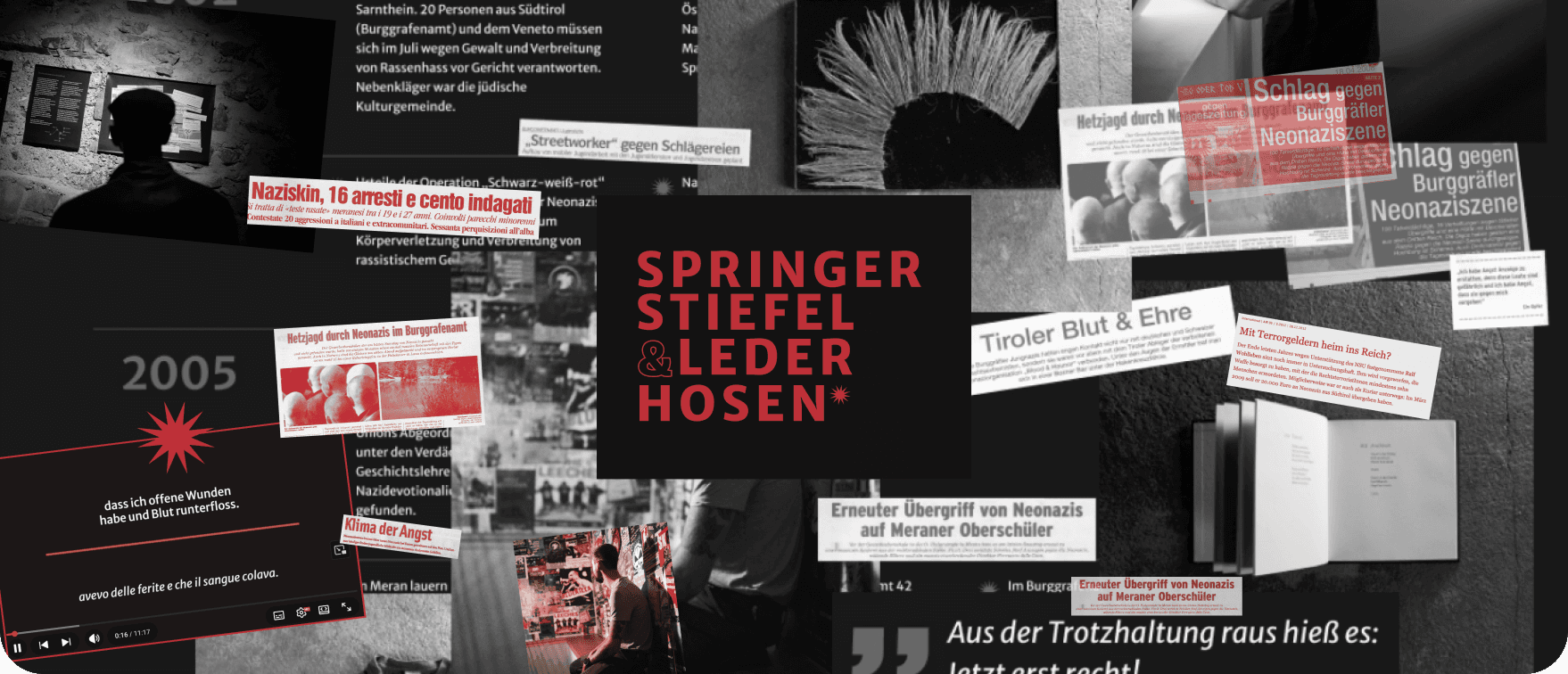
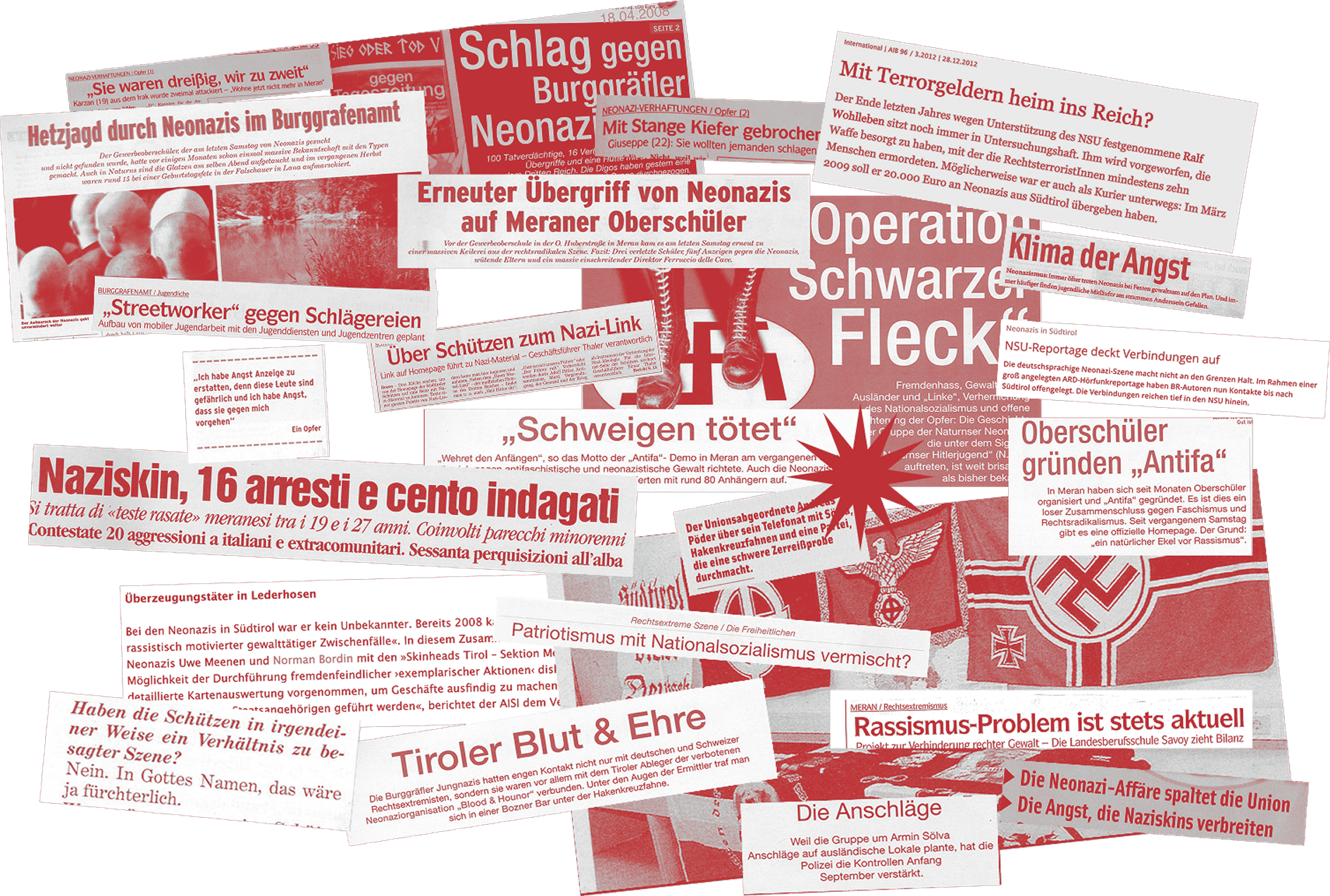
“Springerstiefel & Lederhosen” is a multimedia research project examining Neo-Nazi violence in the Meran area (South Tyrol, Italy) in the early 2000s. The exhibition works as storytelling and combines photography, text, graphics, and audio interviews with affected individuals and people who actively resisted right-wing extremism.
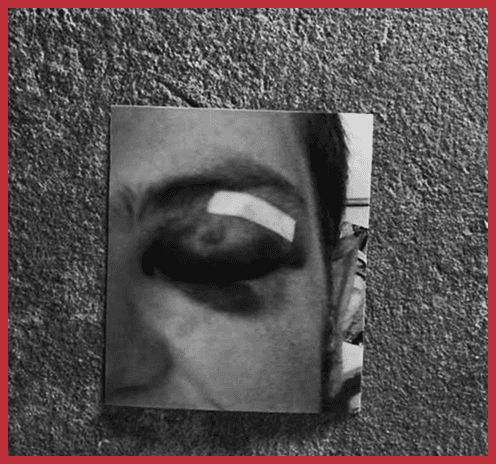
In the Burggrafenamt region, right-wing extremist violence in the early 2000s was rarely documented or publicly addressed. Many experiences remained invisible, fragmented, or marginalized in collective memory.
Problem statement
Right-wing violence was superficially publicly addressed
Personal experiences remained invisible, to be forgotten
Scattered information
No multimedia approach to learn about
How can a physical exhibition spaces be meaningfully connected to digital storytelling?

Goal
" transform="translate(5.769 2.044)" width="4.80488020049448px"/><path d="M 5.628 0.023 C 6.138 -0.092 6.643 0.238 6.755 0.759 C 6.868 1.28 6.544 1.796 6.034 1.911 C 6.034 1.911 6.033 1.911 6.032 1.911 C 6.031 1.912 6.028 1.912 6.025 1.913 C 6.018 1.914 6.008 1.917 5.995 1.92 C 5.97 1.926 5.932 1.934 5.885 1.944 C 5.791 1.966 5.659 1.996 5.507 2.031 C 5.204 2.101 4.828 2.189 4.526 2.262 C 4.071 2.374 3.359 2.726 2.794 3.184 C 2.497 3.425 2.295 3.848 2.039 4.523 C 1.905 4.876 1.868 5.444 1.907 6.119 C 1.945 6.782 2.04 7.355 2.089 7.786 C 2.152 8.335 2.377 8.838 2.684 9.734 C 2.911 10.399 3.204 10.804 3.572 11.07 C 4.047 11.412 4.602 11.618 5.288 11.907 C 5.506 11.998 5.845 12.06 6.287 12.066 C 6.717 12.073 7.186 12.026 7.623 11.946 C 7.889 11.897 8.102 11.777 8.337 11.584 C 8.461 11.482 8.58 11.37 8.724 11.234 C 8.86 11.106 9.025 10.949 9.203 10.806 C 9.677 10.427 10.023 9.95 10.508 8.873 C 10.919 7.961 11.031 7.314 11.084 5.8 C 11.1 5.329 11.124 4.838 11.096 4.365 C 11.067 3.874 10.987 3.549 10.886 3.373 C 10.622 2.913 10.773 2.32 11.223 2.05 C 11.674 1.78 12.254 1.935 12.518 2.395 C 12.851 2.976 12.95 3.677 12.984 4.248 C 13.019 4.836 12.989 5.442 12.974 5.869 C 12.917 7.501 12.787 8.438 12.227 9.681 C 11.686 10.882 11.184 11.677 10.37 12.328 C 10.264 12.413 10.155 12.515 10.01 12.652 C 9.874 12.78 9.706 12.94 9.521 13.092 C 9.136 13.408 8.635 13.725 7.954 13.849 C 7.423 13.946 6.833 14.007 6.261 13.999 C 5.701 13.991 5.094 13.916 4.567 13.695 C 3.997 13.455 3.177 13.151 2.482 12.65 C 1.71 12.093 1.218 11.309 0.898 10.374 C 0.664 9.689 0.305 8.841 0.21 8.01 C 0.174 7.697 0.061 6.967 0.018 6.233 C -0.024 5.511 -0.015 4.588 0.275 3.824 C 0.508 3.21 0.861 2.284 1.618 1.67 C 2.359 1.068 3.317 0.57 4.086 0.382 C 4.4 0.305 4.787 0.215 5.092 0.145 C 5.245 0.109 5.38 0.079 5.475 0.058 C 5.523 0.047 5.561 0.038 5.588 0.032 C 5.601 0.029 5.611 0.026 5.618 0.025 C 5.621 0.024 5.624 0.024 5.625 0.024 C 5.626 0.023 5.627 0.023 5.627 0.023 Z" fill="rgb(0, 102, 71)" height="14.000000000000004px" id="NaACzaWyi" transform="translate(1.236 2.044)" width="12.999999990113576px"/></svg>)
Research in archives and collecting interviews
Provide a low-threshold entry into the topic
Make marginalized experiences visible trough multimedia
Preserve personal testimonies and acts of resistance trough audio
Orientation and clarity across media
Exhibition as a space for information and encounter
My Role
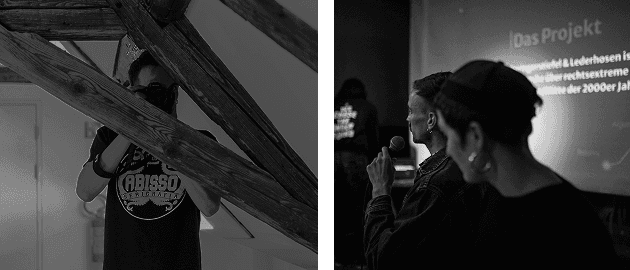
I was responsible for the research, photography, and visual identity of the project. It was a collaboration between me and Mara Stirner, who handled research, the interviews and texts. Springerstiefel & Lederhosen was one of the winning projects of the Weigh Station call, a regional financial support initiative for cultural and creative projects in South Tyrol, Italy.
TARGET AUDIENCE
Springerstiefel & Lederhosen was exhibited in various cultural centers in South Tyrol. The target audience of the exhibition were people with different backgrounds. That’s why we had to make sure, everybody can access the information in the exhibition.
Various levels of knowledge
Witnesses & people from the same area
Sociocultural- interested people
Younger audience with no background
German or Italian speaking
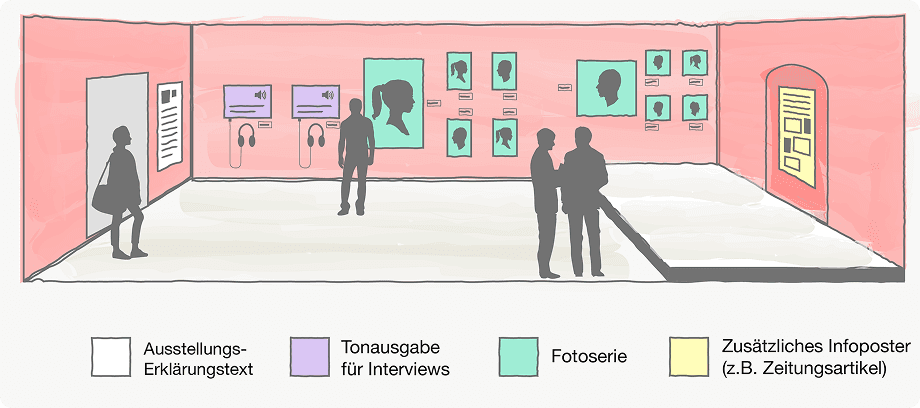
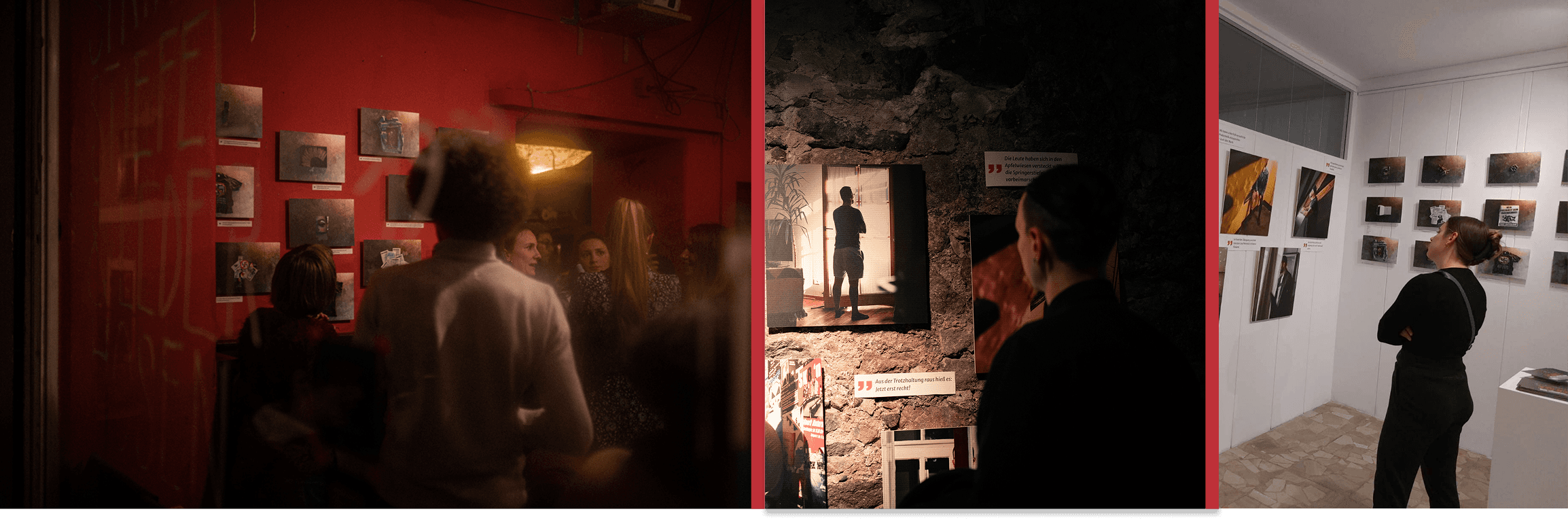
Multimedia documentation
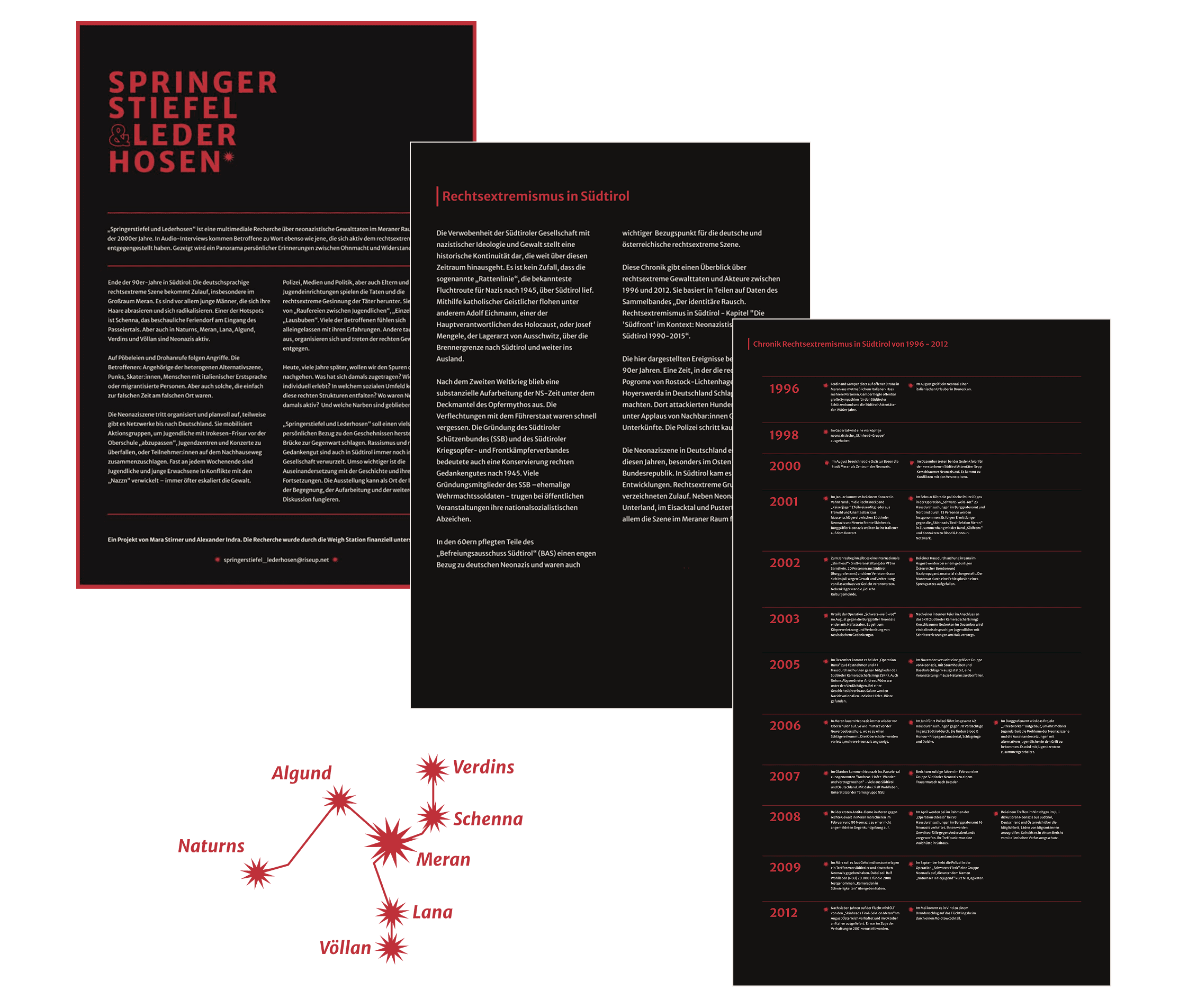
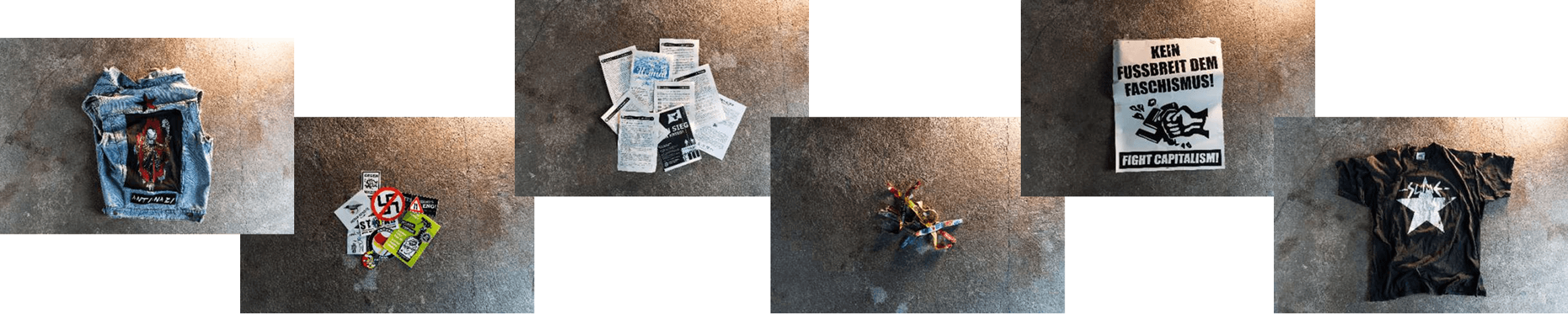
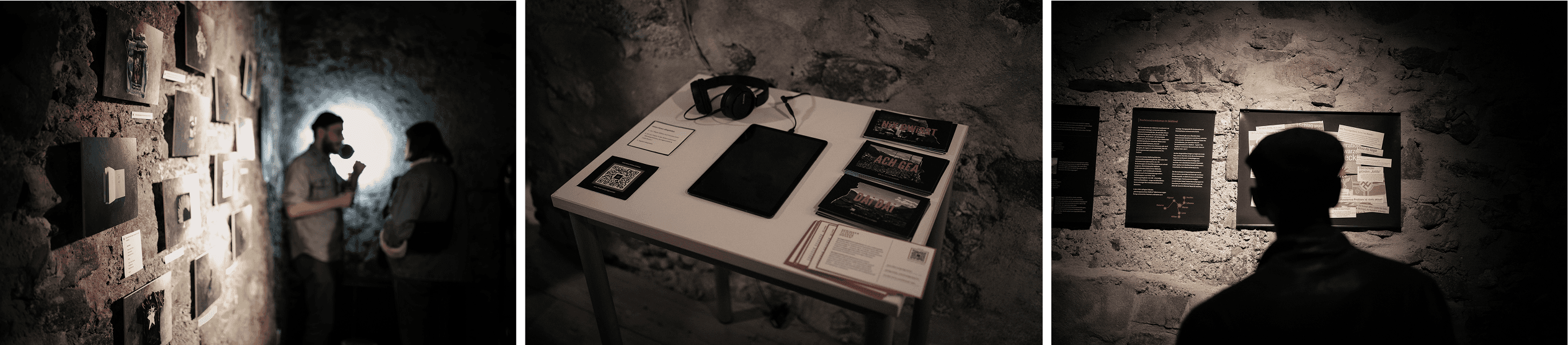
The following fragments show graphics and photographs which are part of the multimedia exhibition.
The project is designed as a narrative space. Visitors decide independently how deeply they want to engage with the content.
Text
Historical and social framing
Graphics
Orientation, visual identity
Photography Connection to audio, spatial context
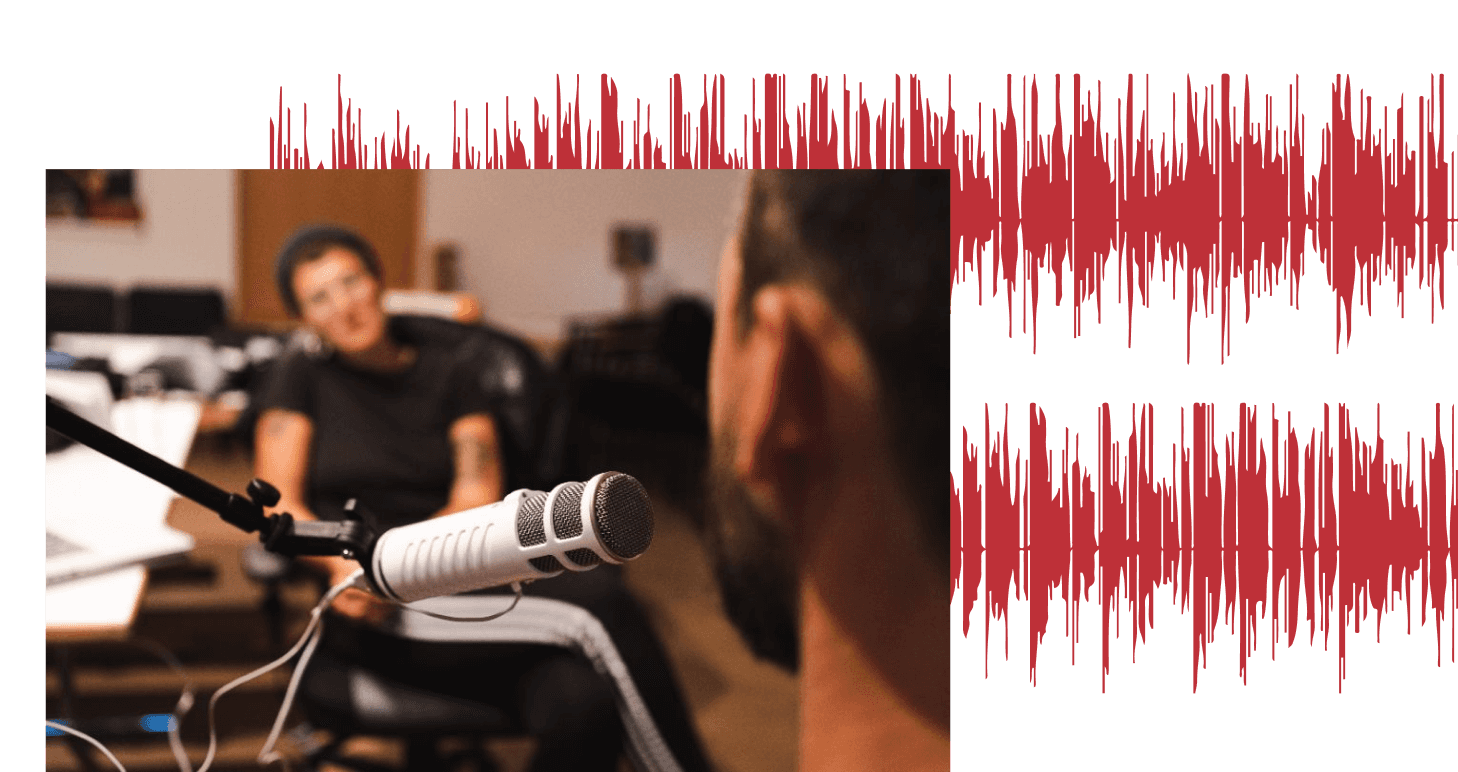
Audio Interviews Personal voices and lived experiences
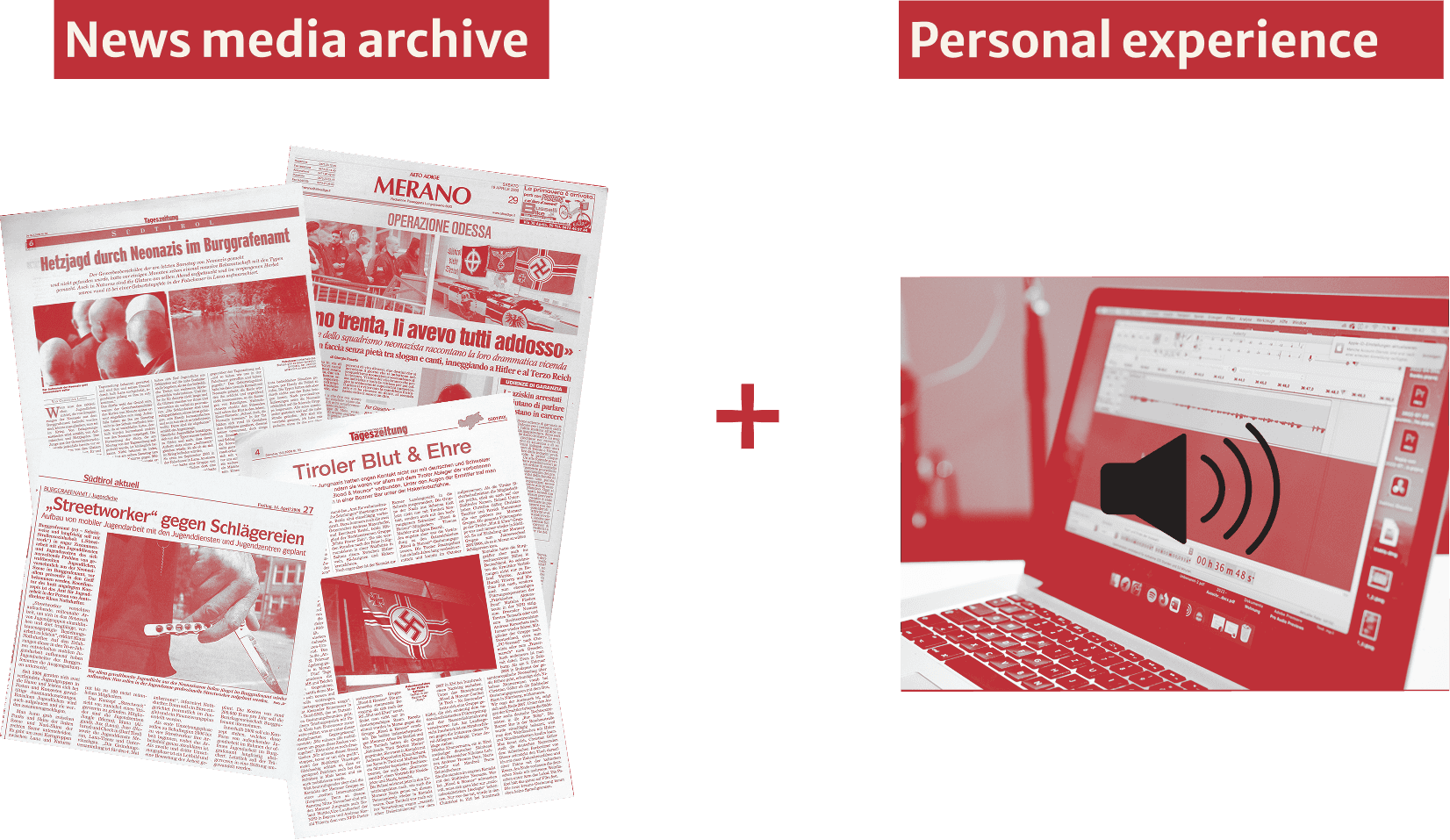
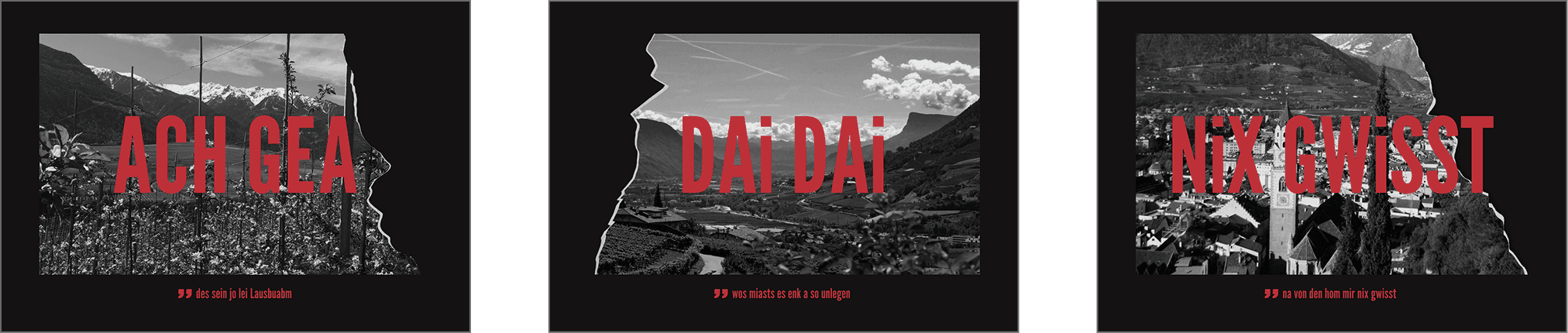
Postcards for the visitors with phrases society was saying during that time, in local dialect and qr-code on the back.
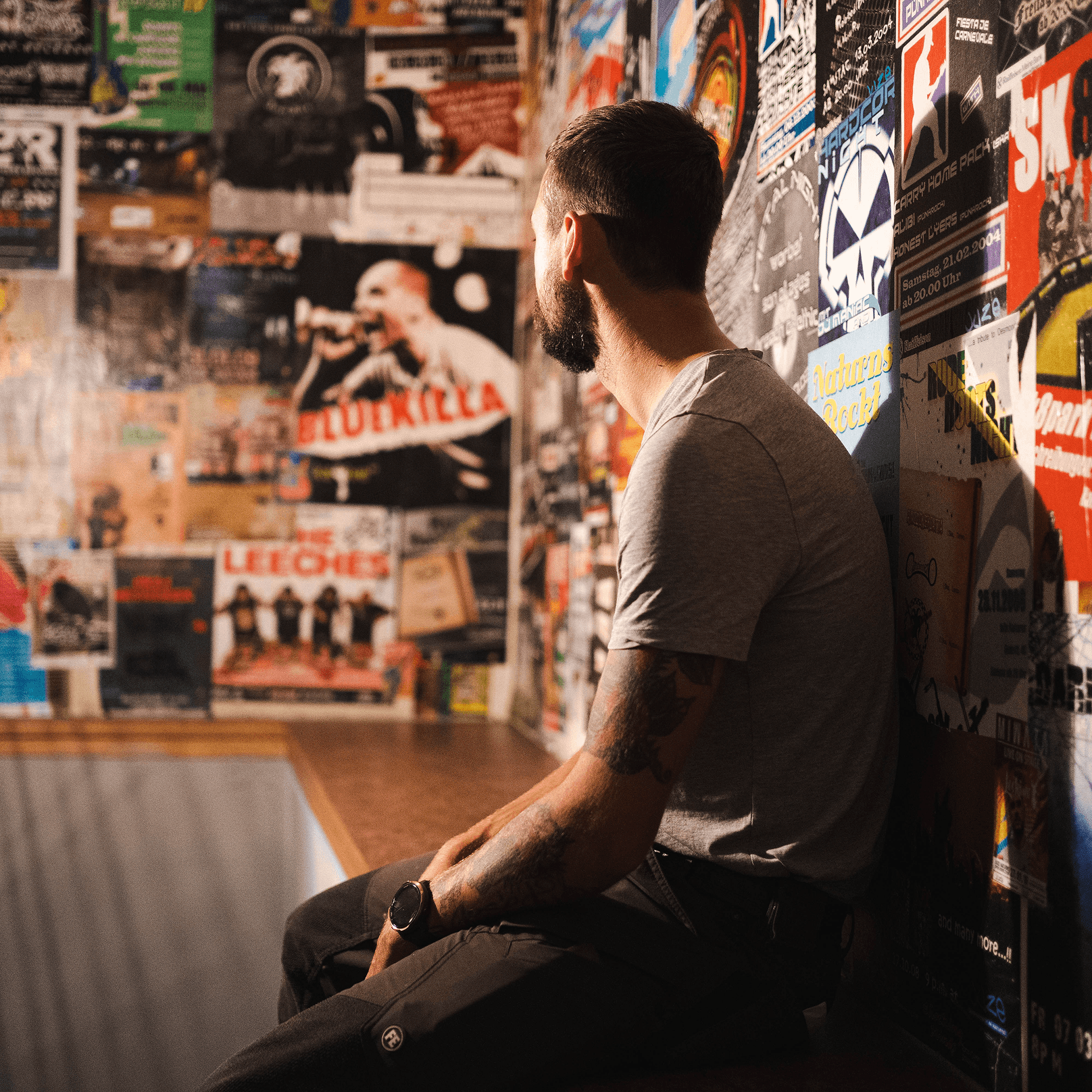
Portraits of involved people
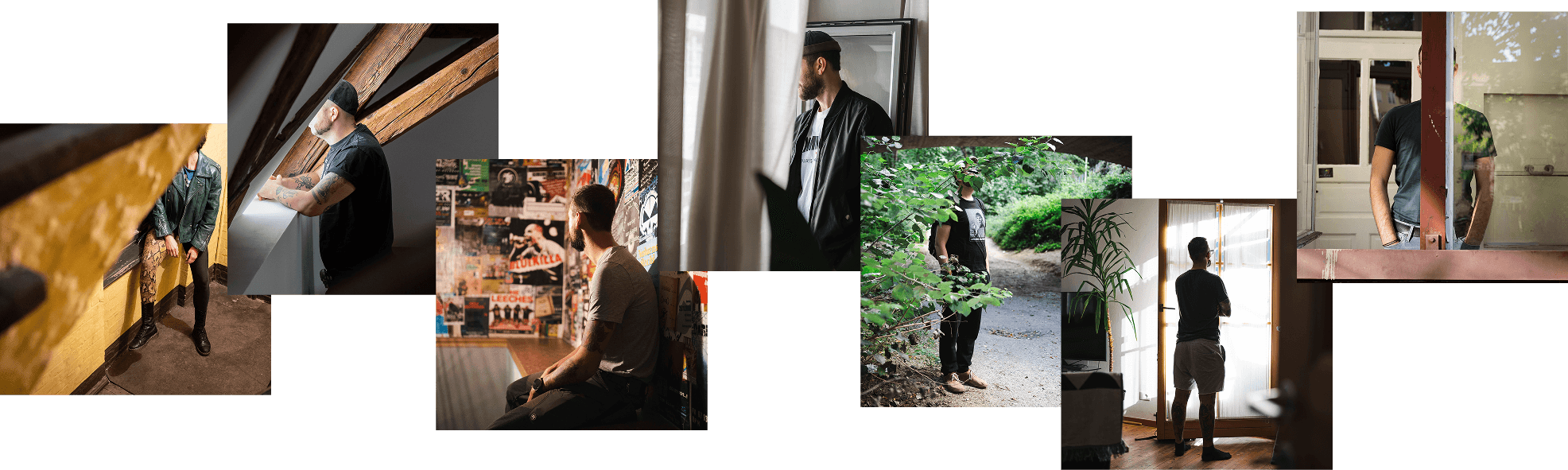
Ich bin damals immer mit einem Blick über die Schulter durch Meran gegangen
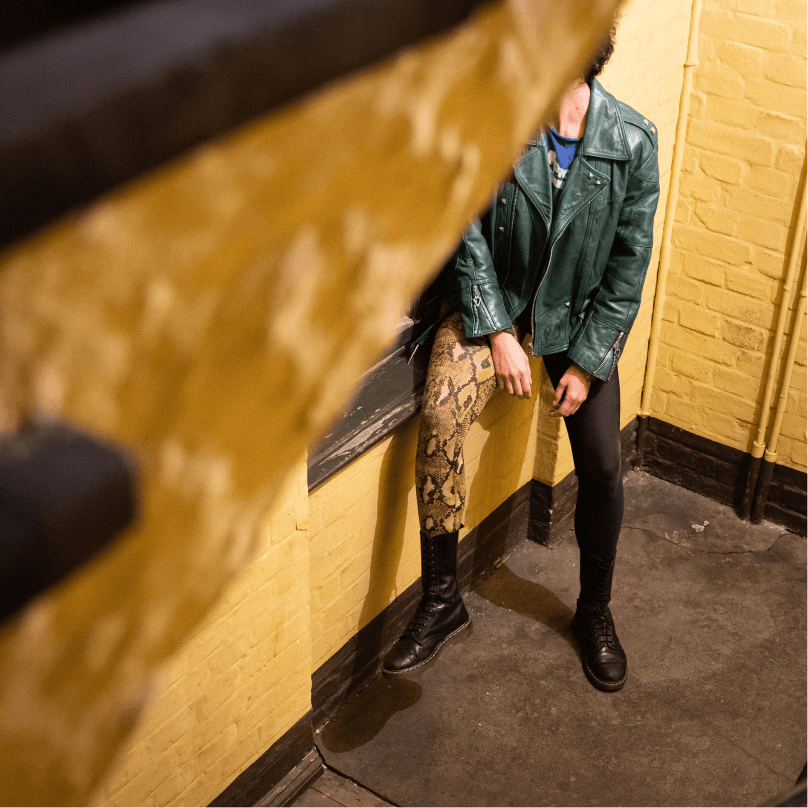
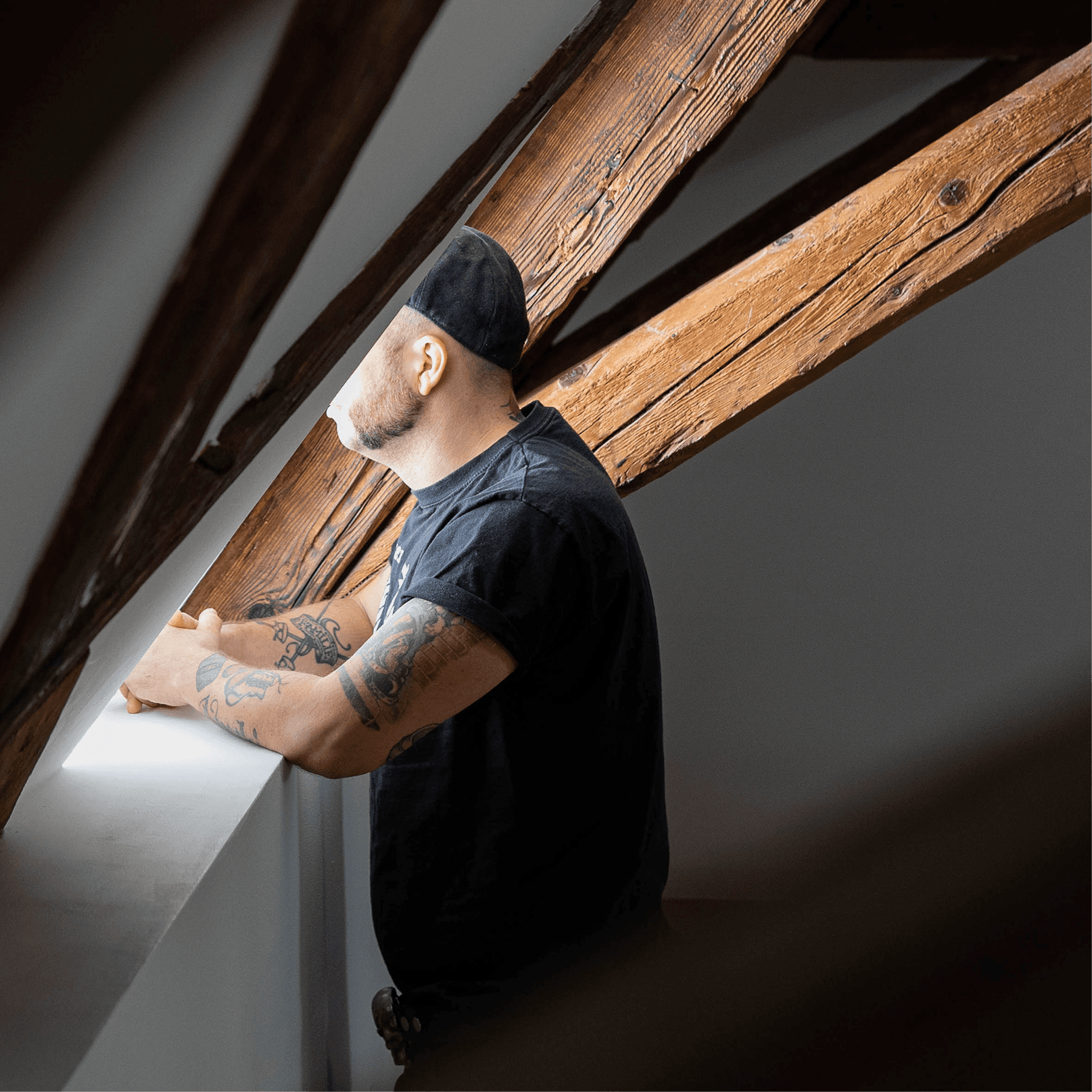
Alle Jugendlichen, die alternativ gekleidet waren, waren ein Feindbild
Wir haben schon früh versucht die Problematik anzusprechen
- auch über Musik
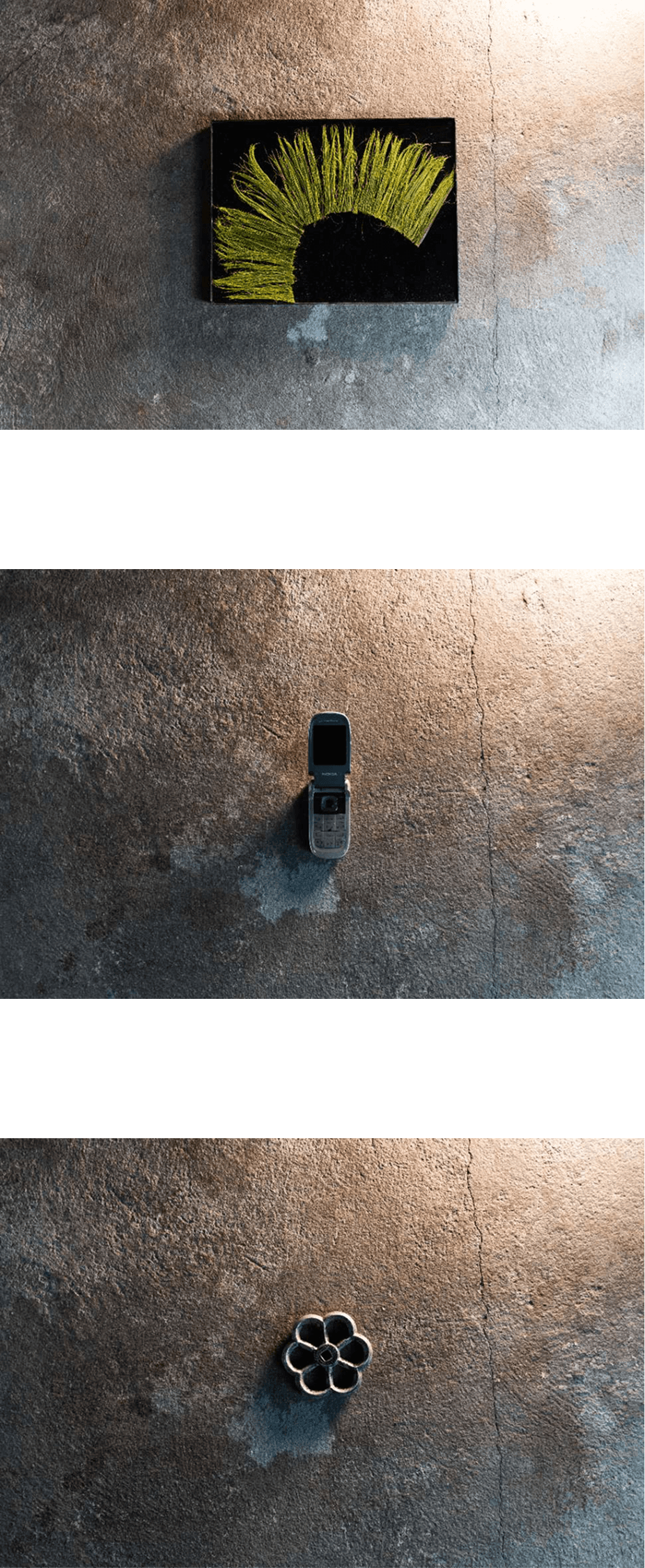
Object memories
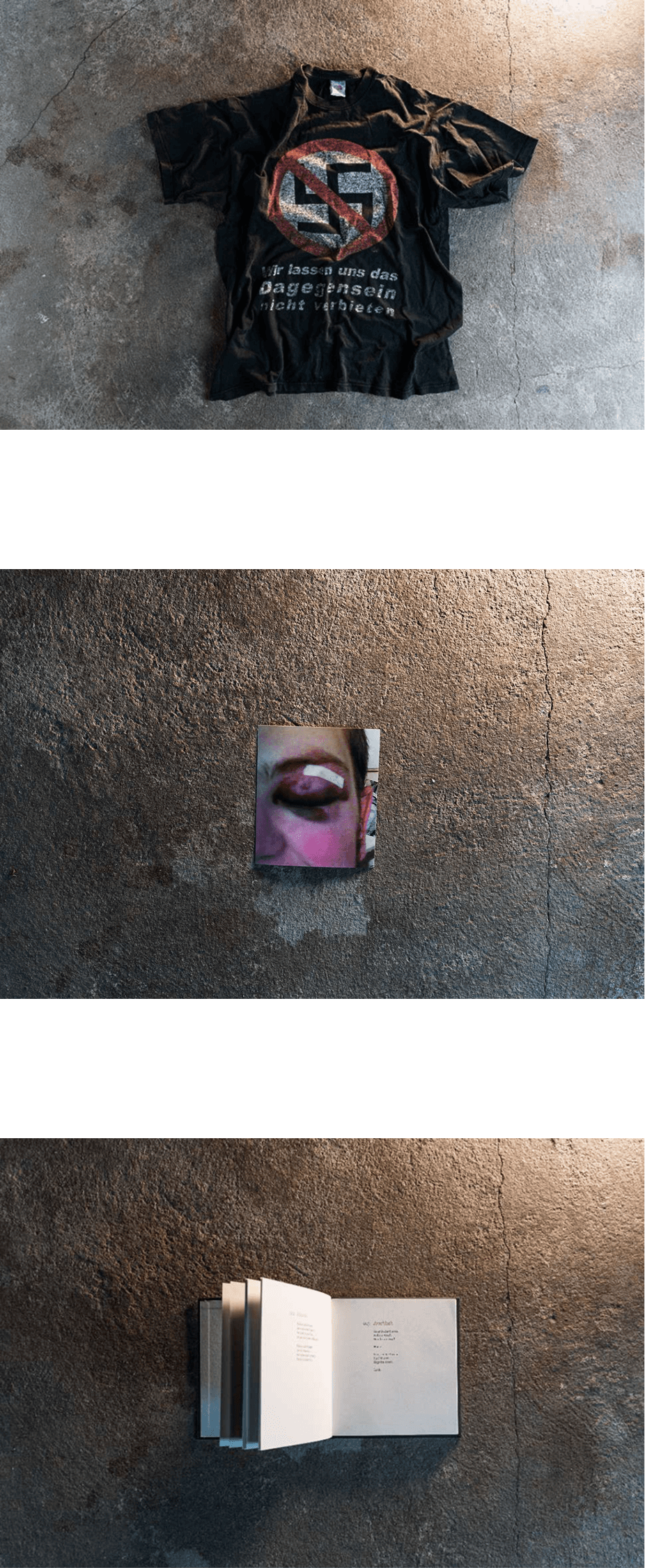
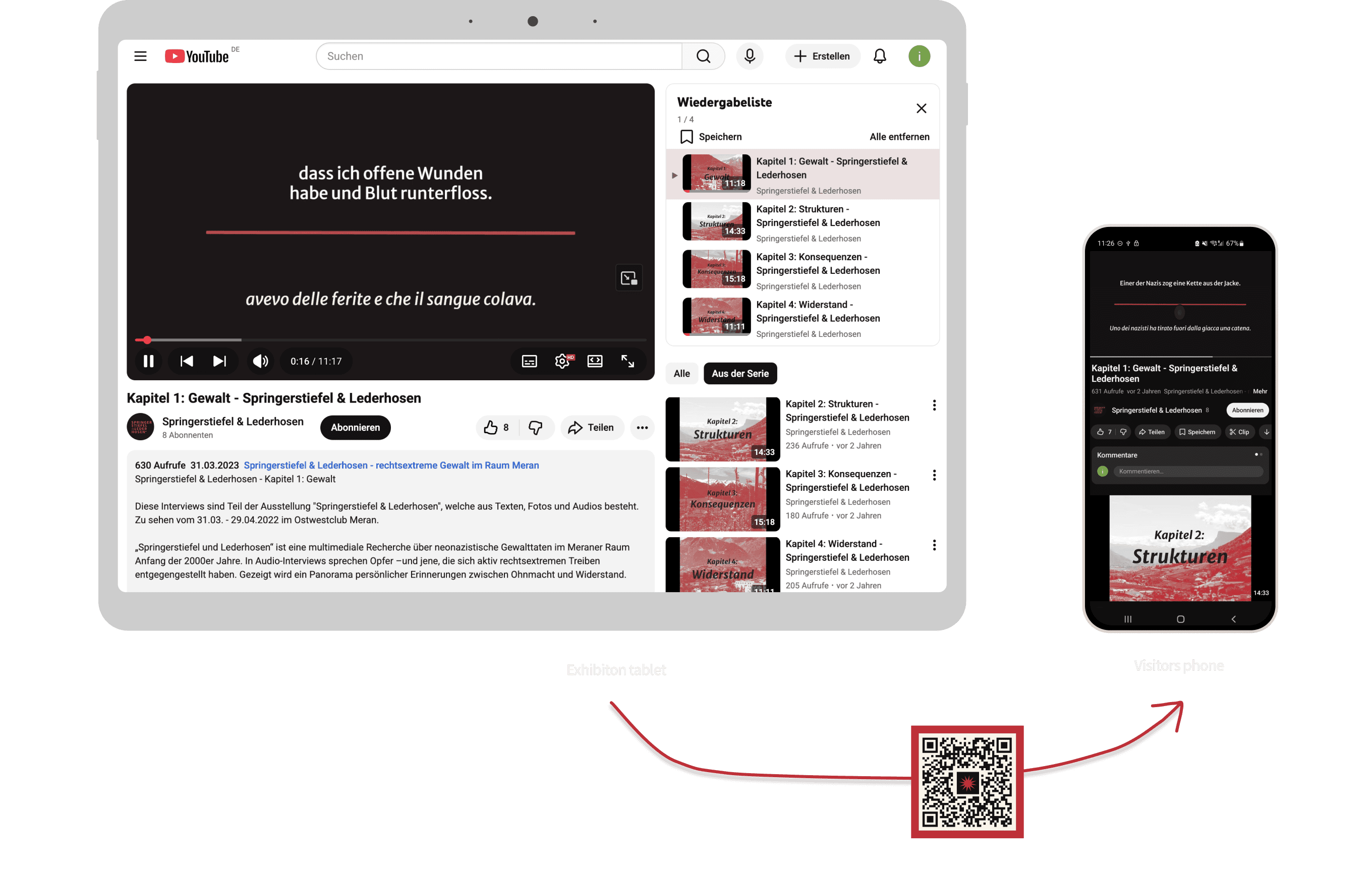
From offline to online
WHATS NEXT
The exhibitions and the underlying research received very positive feedback from visitors. Many were highly engaged and took the time to read, watch, and listen to the audio content, allowing them to dive deeper into the material. Currently, we are awaiting a new round of funding. The goal is to translate the complete research into a web-documentary project, making the content accessible through a structured, user-centered digital experience.
ETHICAL QUESTIONS
Made marginalized experiences visible for visitors with different background. Design carries social and ethical responsibility.
RESEARCH TO DESIGN
Research and media translated into spatial and editorial decisions. UX methods were applied beyond screens, focusing on experience, not interfaces.
CROSS-CHANNEL EXPERIENCE
Physical exhibition with integrated digital touch-points. Audio works well as a narrative center.
CRITICAL CONTENT
How violent and emotionally heavy content can be communicated without overwhelming users. Responsibility toward affected individuals.
STRUGGLE WITH MEMORIES
Many people were hesitant to talk, even anonymously, and memories after 15–20 years were often incomplete.